

After AI went mainstream, data centres literally became hotter than ever. While remaining viable smaller projects, chilled air from CRAC or CRAH units alone no longer gets the job done for big enterprises. Apart from basic, but still widely spread, air cooling, here’s a quick roundup of data centre cooling solutions that set the cooling trends in 2026.
Here, a coolant that flows through cold plates removes up to 80% of heat directly from CPUs and GPUs and spreads the rest into the room. Rear-door heat exchangers (RDHx) are currently the most popular form of liquid cooling. These units are attached to the back of the rack like a radiator. Hot air from the servers passes through the door, gets cooled by chilled water or coolant, and the heat never fully enters the room.
Sensors collect real-time data on temperature, pressure, and power, and AI adjusts fans, coolant flow, and setpoints. Such a system can predict hot spots and prevent overcooling to save energy.
Factory-built cooling units arrive ready to connect on site. This cuts installation time from months to days and ensures high quality control.
In 2026, big AI projects force data centres to handle far more heat than before. According to the 2026 AFCOM State of the Data centre report, the average rack power density increased from 16 kW in 2025 to 27 kW in 2026. That is a massive 69% increase in just one year.
Cooling for AI data centres often needs to handle racks that consume 50-100 kW of energy, which means they produce 3 to 6 times more heat than a typical rack from 2025. Traditional air cooling methods can no longer handle these rising heat loads.
Operators also face challenges with electricity costs, grid limits, and water usage regulations. On top of that, there are persisting problems with retrofitting legacy facilities, hot spots and uneven cooling management as well as permitting and regulatory delays.
Cooling consumes up to 40% of all power in a data centre, especially if it’s fully reliant on air. The resulting high electricity bills are eating up the potential revenue.
In many locations, grid companies cannot supply enough electricity for new or expanded data centres. Delays for approving big or new power supplies can be 4-7 years, forcing operators to cut down on cooling, which lowers the performance of the entire facility.
New regulations in dry regions strictly limit water for cooling towers and evaporative systems. Many governments and local authorities, especially in the EU, now require low Water Usage Effectiveness (WUE) reports, which makes traditional water-focused methods hard to use.
The majority of existing data centres were designed only for 5-15 kW per rack. They struggle with today’s AI heat loads.
Highly dense AI racks tend to create localised hot spots and sudden thermal spikes that are hard to manage with air-only cooling.
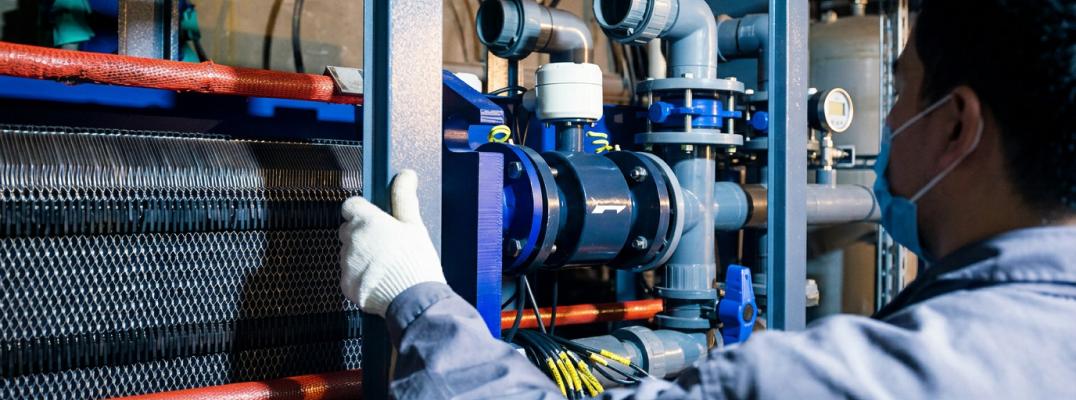
Since newer hardware already uses less power, the only realistic way to stay economically efficient is to adopt data centre cooling technologies that consume as little electricity and water as possible. Of course, big changes don’t happen overnight and many promising solutions are being implemented slowly, but here are the main directions in which the industry is moving this year.
Liquid cooling for data centres is no longer an emerging technology. In 2026, it’s a go-to solution for any operator that needs to handle serious AI heat loads. Big hyperscalers, for whom efficient high-density data centre cooling, is absolutely vital have already made the transition.
Google, Microsoft, and Meta now build more new AI clusters with liquid cooling from day one. Presently, direct-to-chip cooling is standard for GPU training racks, while rear-door units are employed on a massive scale for mixed or legacy loads. Around 40% of AI-first data centres are relying on liquid cooling, up from 33% last year.
The market for liquid cooling technologies for data centres is growing at a 25-30% annual rate. We forecast that it will reach $6-7 billion in 2026 alone. The two reviewed methods will remain the leaders of the adoption race because they are reliable, easier to install, and don’t require facility redesigning.
Looking ahead, this trend will only get stronger. By 2027, more than 50% of new hyperscales is expected to be liquid-cooled, and more than 60% by the end of the decade.
Despite immersion cooling remaining a niche solution due to its integration complexity, it has been gaining real attention as an answer for the most extreme heat loads. Currently, only 10-15% of data centres use immersion, mostly for AI supercomputers, HPC labs, or high-density AI training clusters. Hyperscalers are actively experimenting with it, but full fleet-wide adoption is very rare due to high upfront costs, complicated maintenance, and the need for custom designs or facility overhauls.
However, speaking in trading terms, the trend here is definitely bullish. In fact, immersion is growing faster than other liquid cooling methods, especially in the ultra-dense segment. We predict that by 2027-2030, it could reach 20-30% share in new high-density AI racks that consume over 100 kW. At the same time, the overall data centre penetration will stay at the lower end.
Immersion cooling won’t become a default method for most operators in the near future, but AI-focused facilities that are already hitting the absolute limits on current cooling will actively shift towards it.
Despite its growing popularity, most data centres aren’t going fully liquid yet. Instead, they combine air and liquid methods within the same facility. The transition to hybrid systems is the strongest cooling trend right now.
Data from early 2026 show that 45-50% of operators are using or strongly considering hybrid setups. In new hyperscale data centres, many setups are up to 60% liquid for AI racks and 40% air for general computations. For many providers, it remains the easiest way to attract AI customers without rebuilding the whole site.
The hybrid method is predicted to become more the near future of data centre cooling, as AI racks spread to enterprise and colocation. The share of full-liquid facilities will grow in parallel, but hybrid infrastructure will remain the main bridge to more innovative cooling technologies for the next several years.
AI to take over cooling management
AI-driven thermal management is already standard in most new large data centres. Older sites add it through software upgrades. In 2026, it’s the quickest and most budget-friendly efficiency fix that will become even more popular in the coming years.
Properly tuned AI-supervised cooling systems cut power consumption by 10% or more shortly after implementation. PUE drops 0.1-0.3 points on average, which is a huge win for operators who work in jurisdictions where every such point counts.
Modular cooling is the trend that will keep gaining momentum in 2026, because operators are all about practicality, so they want to build and scale quickly without long on-site work.
Up to 80% of new projects plan to use prefabricated cooling components this year. The reason for such massive popularity is speed and quality control, and it will persist over the coming years. It’s expected that prefabs will have a 90% adoption rate in new builds by 2028.
In 2026, lowering power usage effectiveness (PUE) is the number one focus for most operators. The current goal for them is to stay the closest possible to 1.0. Some hyperscales already reach 1.1 with liquid and hybrid cooling, while the average PUE is expected to fall to 1.3-1.4 by 2028.
In 2026, lowering Power Usage Effectiveness (PUE) still sits at the top of priority list for most data centre operators. Leading hyperscalers often achieve results between 1.1 and 1.2 with liquid and hybrid cooling, getting close to the ideal 1.0. At the same time, the broader industry average is expected to improve to 1.3-1.35 by 2028. That’s a real progress compared to traditional air-cooled facilities that usually run at PUE 1.5 and above.
New water usage effectiveness (WUE) regulations are already putting strong pressure on operators of data centres in dry regions of Europe, the US Southwest, and MENA. They demand a near-zero WUE in new builds, which will push the adoption of closed-loop liquid and hybrid cooling, as well as experimental methods like two-phase refrigerant dry systems.
By the end of 2020s liquid cooling will dominate new high-density and AI builds after bridging the existing gaps with the help of hybrid systems. AI-assisted ambience management system clearly becomes the fastest adopted innovation in data center cooling, present in almost every large facility in the near future.
The future of data centre cooling technology is clear: it stops being a driver of cost and becomes a competitive advantage. Operators who successfully adapt to the cooling trends will lead the pack in the new AI era.
If you're planning AI deployments or struggling with high-density workloads, now is the time to rethink your cooling approach.
We can help you:
Assess your current infrastructure
Identify efficiency gaps
Design a scalable cooling strategy
Get in touch to discuss your data centre cooling roadmap.


